Esports programs are an expanding focus for many schools in the coming school year. While building an esports program may come with challenges, esports is proven to benefit schools, educators, and students in substantial ways[1]. Here are our reasons to build or expand an esports program in any school!
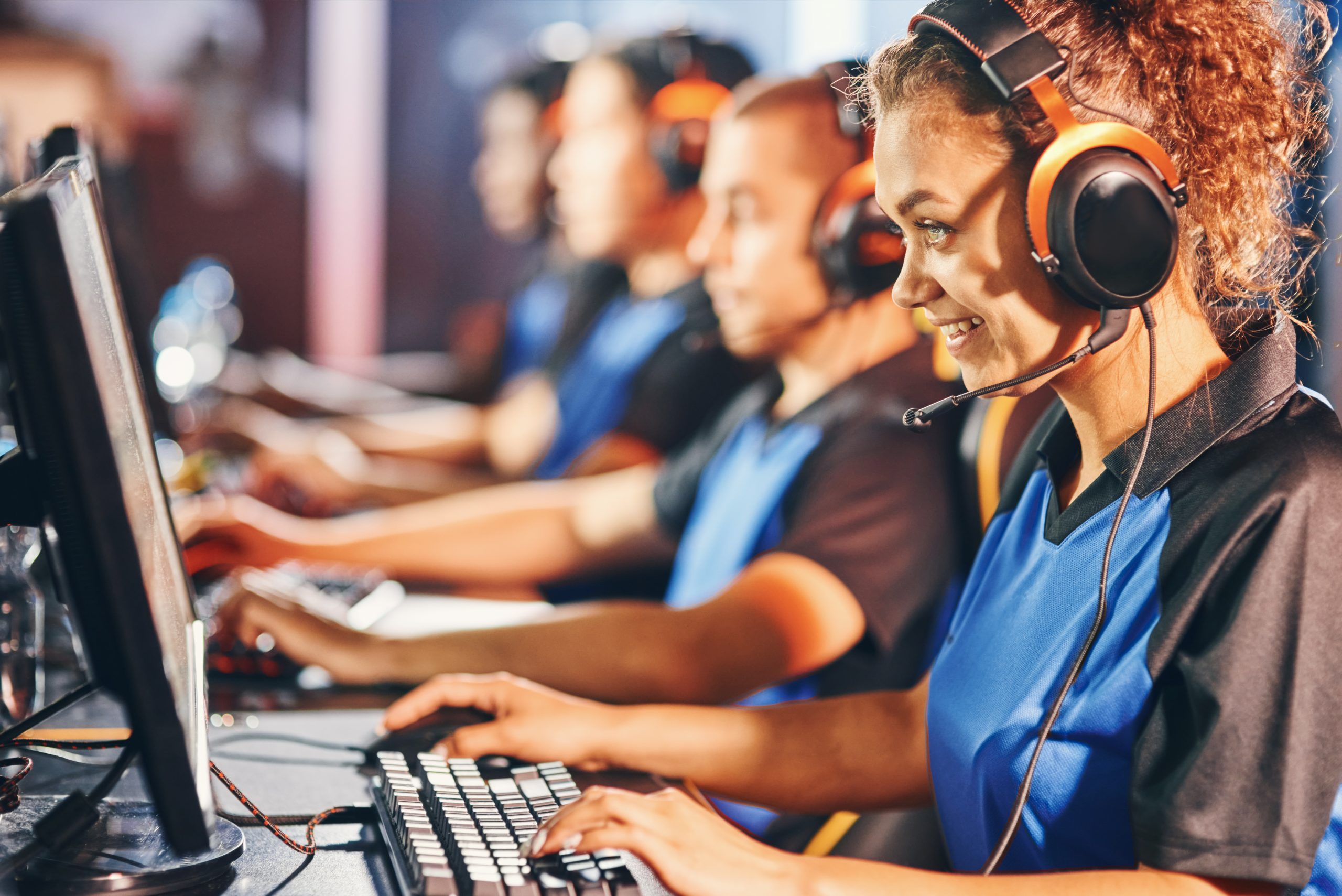
Esports is inclusive. Esports serves as a platform for students who may not be interested in other commonly offered extra-curricular activities. Like physical sports teams, esports provides an atmosphere of healthy competition, teamwork, encouragement, and friendliness. It focuses on expanding video game play, an activity already familiar and well-loved by students.
Esports complements academics. Esports programs benefit many educational endeavors. By implementing a minimum grade policy for participation, students will be more motivated to keep on top of schoolwork. We recommend using a student’s work ethic scores, if available, instead of using solely academic scores. Furthermore, attendance policy requirements for esports participants enforce school participation, which is vital for learning. Esports may also be used as an education tool to fit into school curriculum. Students that participate in esports programs support school representation and build morale in the process.
Esports fosters teamwork. The nature of esports – requiring players to work together to achieve an end goal – makes it a great way to teach and practice teamwork. Teams must coordinate with each other and communicate effectively in order to win. A diverse team is comprised of players with different backgrounds and skillsets, and it is a great way to connect students from different social groups. Additionally, many teams can help break gender or ethnic stereotypes when all students play together and contribute to the team. Using virtual tools, students also interact with other schools locally or worldwide!
Gaming is the perfect tool to combat the social, economic, or racial walls imposed by society. – Taylor Lowe
Esports teaches future-ready skills. Computer science and video game development are among the fastest-growing career fields. Including esports as part of a school’s offerings helps students get ahead in their careers. The North American Scholastic Esports Federation (NASEF) divides esports roles into four categories that correlate with career pathways including:
- Strategists
- Organizers
- Content Creators
- Entrepreneurs
Students participating in esports programs learn practical, future-ready skills. People who play video games score higher on tests of empathy than those who don’t, according to researchers[2]. Specifically, they showed greater “pro-social behaviors” such as helping others or sharing their resources. They also exhibited less aggressive behavior than nonplayers. In other words, esports programs are a great way to implement social-emotional skills in a hands-on setting.
Esports is creating a safe place for neurodiverse students to flourish and become leaders. It’s the one “sport” where the teacher/coach doesn’t need to be an expert at the game, they just need to have a willingness to learn from the students and be a mentor. – Julie Mavrogeorge
More benefits of an esports program. In addition to the benefits mentioned above, using esports gaming platforms teach other important skills including media literacy and critical thinking—which are key components of 21st-century learning. Many believe that video games serve a positive effect on society overall by encouraging creativity and problem-solving skills while also giving kids something fun and entertaining to do after school or work!
i2e is excited to partner with schools and districts to bring esports professional development to you! Check out our professional development options and contact us for more information. Also, learn more about our i2esports startup kit, which you can use as a guide to start or grow your esports program!
[1] (2021) Why esports in schools is a good thing. In: ViewSonic Library. https://www.viewsonic.com/library/education/esports-schools-good/
[2] Passmore, Holli-Anne & Holder, Mark. (2014). Gaming for good: Video games and enhancing
prosocial behaviour.